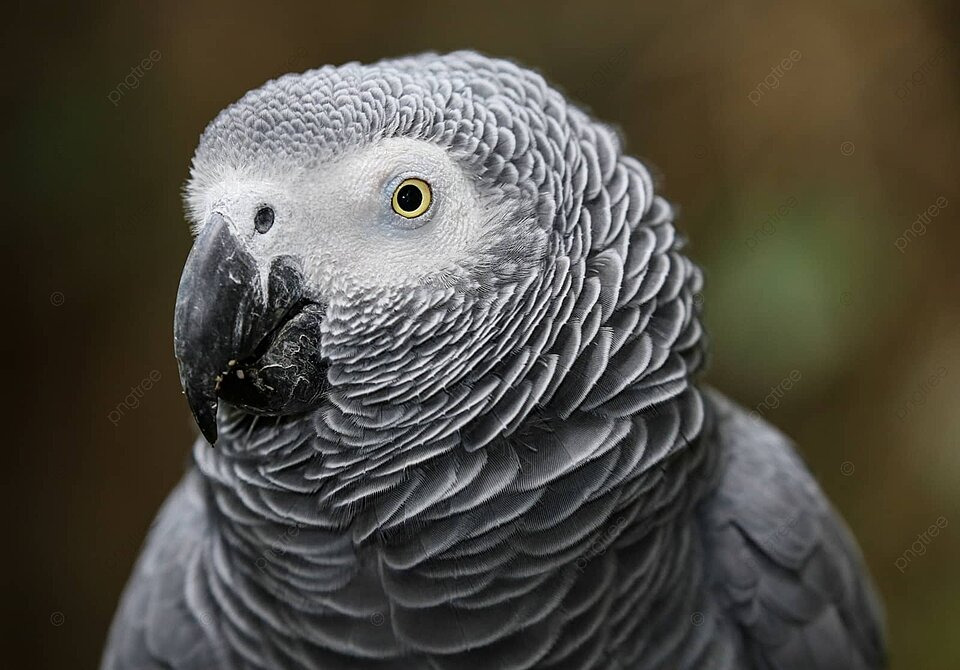
Saudi Arabia is one of the most active markets for African Grey Parrots in the Middle East — and for good reason. These birds are extraordinarily intelligent, capable of mimicking human speech with uncanny accuracy, and can become lifelong companions for up to 60 years. But before you search “African Grey for sale in Riyadh,” you need a clear picture of what buying and keeping one actually costs.
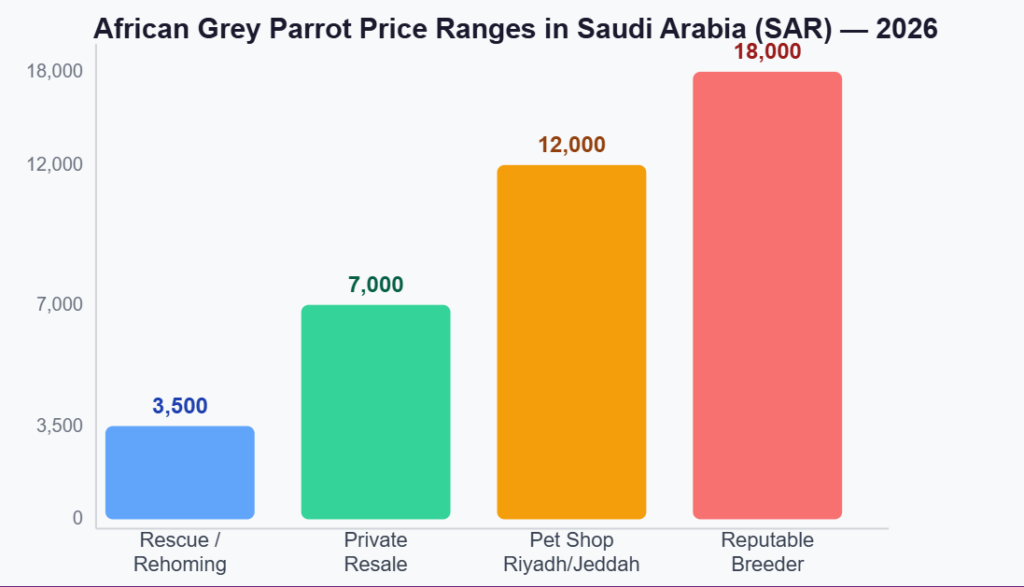
African Grey Parrot Price in Saudi Arabia can vary dramatically. A privately rehomed adult Grey might go for SAR 3,500, while a hand-raised baby from a quality breeder can fetch SAR 15,000 or more. There’s also a legal dimension most buyers overlook: African Greys sit on CITES Appendix I, the highest tier of international wildlife protection, which shapes how they can be legally imported and sold in Saudi Arabia.
This guide walks you through African Grey Parrot Price in Saudi Arabia, everything — real KSA market prices, the two subspecies and what you’ll pay for each, setup costs, monthly expenses, and how to avoid buying an illegally sourced bird.
Key Takeaways
- African Grey Parrots in Saudi Arabia typically sell for SAR 2,500–15,000+ depending on age, subspecies, and source.
- African Greys are listed on CITES Appendix I; all imports require valid CITES permits and Saudi Wildlife Authority approval.
- Monthly care costs run SAR 400–900 for a healthy bird, rising sharply if veterinary emergencies occur.
- Congo African Greys are larger and more common; Timneh African Greys are calmer and often better for first-time owners.
- Buying from a reputable, CITES-compliant breeder protects both your investment and the species.
What Is the African Grey Parrot Price in Saudi Arabia Right Now?
African Grey Parrots in Saudi Arabia currently trade at widely different price points depending on where you look and what you’re buying. Based on active listings on Saudi marketplaces like OpenSooq and Dubizzle as of mid-2026, here’s what the market looks like:
| Source | Price Range (SAR) | Notes |
|---|---|---|
| Private resale (adult, talking) | 3,500–7,000 | Often includes cage and accessories |
| Pet shop (Riyadh/Jeddah) | 5,000–12,000 | Varies by shop and documentation |
| Reputable breeder (hand-raised baby) | 8,000–18,000 | Comes with health checks and paperwork |
| Rescue/rehoming | 1,500–3,500 | Lower cost; bird history may be unknown |
Our finding: A listing on Aryeb.com showed a talking, 3-year-old African Grey in Riyadh priced at SAR 3,500 — described as a “bargain” compared to pet shop prices that run “double this price” for a fully talking bird.
The per-USD equivalent ranges from roughly $660 to $4,800. This tracks with global breeder pricing from Parrot Care Central, which documented hand-fed baby prices of $1,500–$3,500 as of March 2026. In Saudi Arabia, import costs, documentation, and local demand push prices toward the higher end of that range.
Congo vs. Timneh: Which African Grey Should You Buy in KSA?
Most people buying an African Grey in Saudi Arabia don’t realize they’re choosing between two distinct subspecies — and the choice affects both the price and what living with the bird will actually be like.
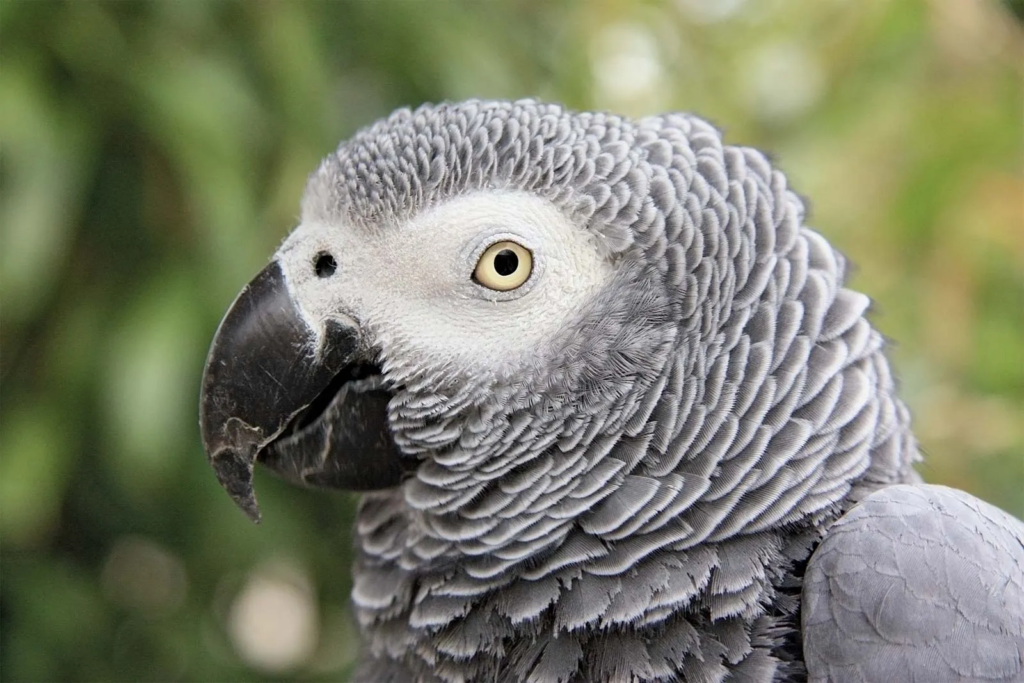
The Congo African Grey (Psittacus erithacus erithacus) is the one most people picture: large, light silvery-grey plumage, a striking bright red tail, and a black beak. In the Kingdom, Congo Greys dominate the pet trade. They’re the bigger talkers — capable of developing large vocabularies — but they’re also more sensitive, more prone to anxiety and stress-related feather plucking, and better suited to experienced owners. According to Chewy’s April 2025 breed guide, Congos typically begin talking around 12 months of age.
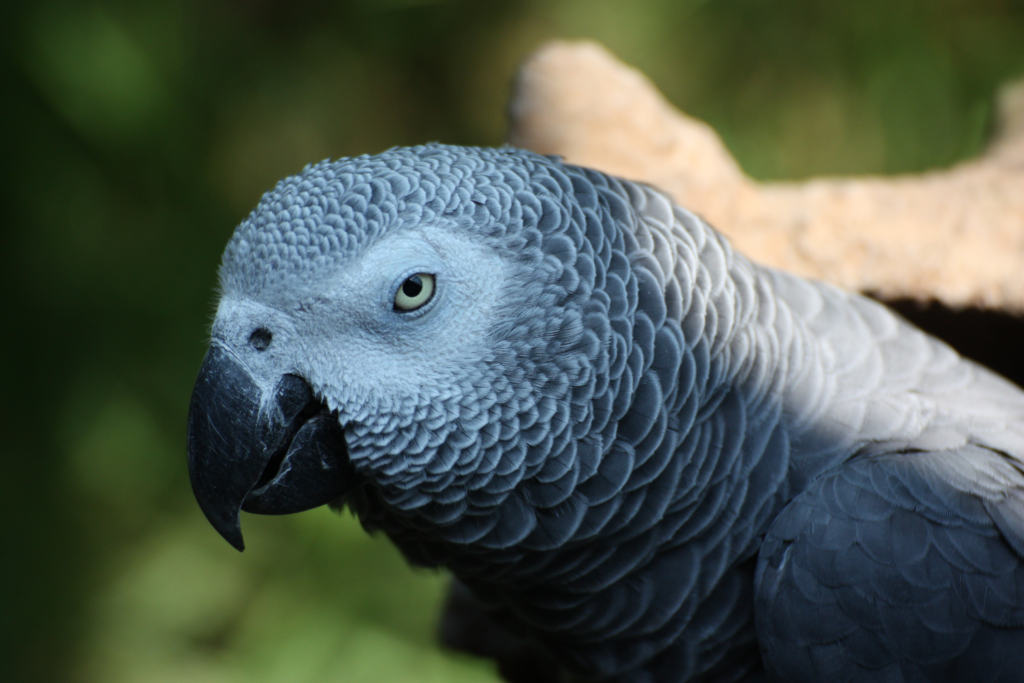
The Timneh African Grey (Psittacus erithacus timneh) is smaller, darker charcoal-grey with a maroon tail and a lighter upper beak. As PangoVet’s 2025 comparison found, Timnehs are calmer, more adaptable, start talking as early as 6 months, and bond more easily with multiple family members — making them a smarter choice for first-time grey owners or busy Saudi households.
In terms of price, Congo Greys typically command SAR 500–3,000 more than comparable Timnehs. Globally, Congos sell for $1,000–$3,000 versus $800–$2,000 for Timnehs, according to African-grey-parrot.com’s January 2026 price comparison.
Our finding: In Saudi Arabia, Timneh African Greys are harder to find than Congos — most local pet shops and breeders stock Congos almost exclusively. If you want a Timneh, expect to wait longer or pay a premium for a specially sourced bird.
Are African Grey Parrots Legal to Buy in Saudi Arabia?
This is the question that trips up far too many buyers — and the stakes are high. Since February 4, 2017, African Grey Parrots have been listed on CITES Appendix I, the highest level of international wildlife protection. This effectively bans commercial international trade in wild-caught birds.
In Saudi Arabia, the Saudi Wildlife Authority (SWA) oversees compliance. As Vervo Logistics’ 2024 legal framework guide explains, any import or export of African Greys into or out of the KSA requires:
- Explicit permission from the Saudi Wildlife Authority (SWA)
- Valid CITES export and import permits
- Health certificates and vaccination records
- Microchip numbers listed on customs documentation
- Compliance with IATA live animal transport regulations
What does this mean for buyers in Riyadh or Jeddah? It means you should always ask for documentation. A legitimate seller — whether a breeder or pet shop — should be able to provide CITES permit numbers and SWA documentation. If they can’t, the bird may have entered the country illegally.
Importantly, as Mongabay’s December 2025 investigation revealed, Saudi Arabia and the UAE were historically the two main export markets for grey parrots from the Democratic Republic of Congo — much of it illegally. The DRC banned parrot capture and trade in July 2025, further tightening the legal supply chain. Captive-bred birds from registered facilities are the only fully compliant source.
Our finding: The DRC’s July 2025 ban on parrot capture and export means the legal supply of wild-origin African Greys entering global trade has effectively dried up. Birds available in KSA should now be captive-bred and properly documented — but enforcement is still catching up to reality.
What Are the One-Time Setup Costs in Saudi Arabia?
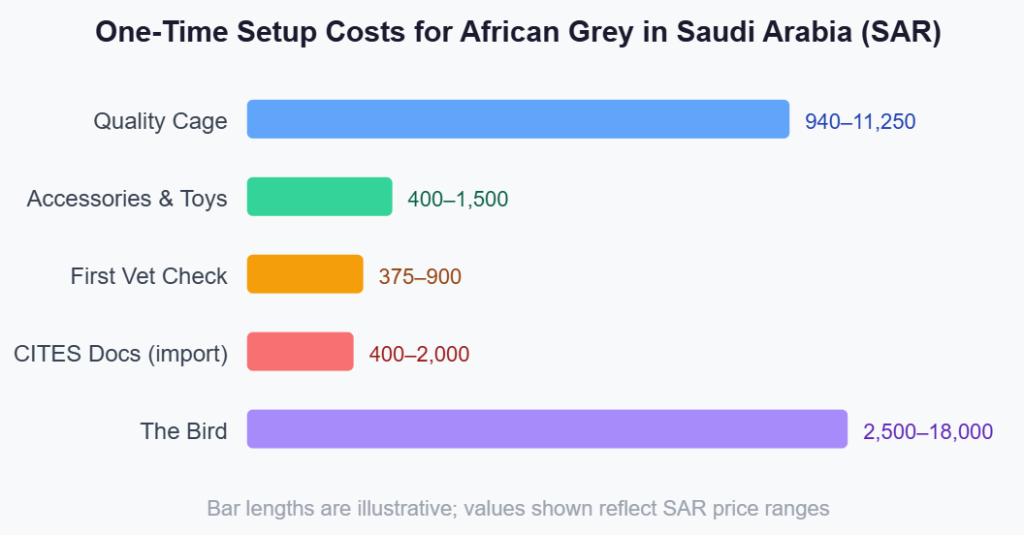
The bird is only the beginning. Before your African Grey comes home, you’ll need to invest in a proper living environment. These are the one-time expenses to budget for:
Cage: This is your biggest setup cost. African Greys are large, active birds and need significant space. According to SpectrumCare’s March 2026 cage guide, a suitable large cage costs $250–$1,000 (SAR 940–3,750) for powder-coated steel, or $1,200–$3,000+ (SAR 4,500–11,250) for stainless steel. Don’t cut corners here — a cramped cage causes the feather-plucking and self-destructive behavior that African Greys are notorious for.
Accessories: Perches, stainless steel food bowls, water bottles, foraging toys, and cage liners add SAR 400–1,500 to your initial spend, according to Hepper’s January 2026 price guide.
Initial vet check: An exotic avian vet visit for a health screening runs SAR 375–900 ($100–$250) in major Saudi cities, though avian specialists are limited mainly to Riyadh and Jeddah.
CITES/import documentation (if sourcing from abroad): Expect documentation costs of SAR 400–2,000 depending on country of origin and the specific permits required.
How Much Does It Cost to Keep an African Grey Parrot Monthly in KSA?
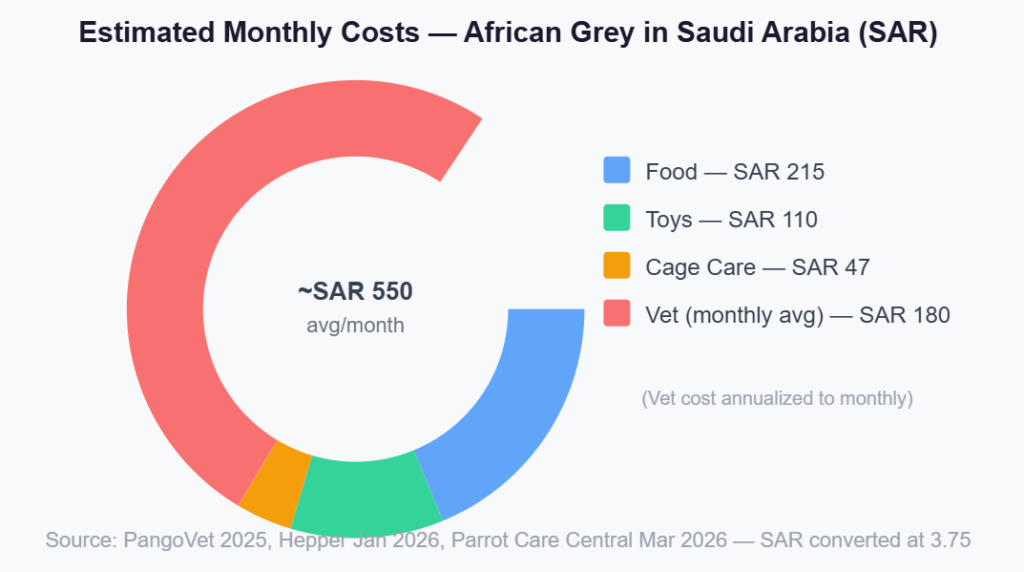
Once your bird is home, the recurring expenses kick in. Here’s a realistic monthly breakdown for Saudi Arabia (in SAR, converted from international figures at the prevailing exchange rate):
Food (SAR 170–260/month): About 80% of an African Grey’s diet should come from high-quality pellets, with the remaining 20% from fresh fruits and vegetables, according to PangoVet’s 2025 care guide. Monthly food costs globally run $45–$70 — equivalent to SAR 170–260 in KSA, though fresh produce can be cheaper.
Toys and enrichment (SAR 75–150/month): African Greys destroy toys — it’s how they stay mentally healthy. Parrot Care Central’s March 2026 guide recommends budgeting $20–$40 monthly for toy rotation. Skipping this leads directly to feather plucking and behavioral problems.
Cage maintenance (SAR 40–55/month): Cage liners, safe bedding, and cleaning supplies add $10–$15 per month to running costs (Hepper, January 2026).
Vet care (SAR 375–1,100/year): Annual well-bird exams run $100–$300 globally. In Saudi Arabia, exotic bird veterinarians are concentrated in Riyadh and Jeddah, and specialist fees can be higher. Emergency care, if ever needed, typically costs $300–$1,200 internationally — plan for a SAR 3,000–4,500 emergency fund.
The total monthly recurring cost for a healthy African Grey in Saudi Arabia lands at roughly SAR 400–700 in normal months, with significantly higher potential in months with vet visits or health emergencies.
Where Can You Buy an African Grey Parrot in Saudi Arabia?
There are several routes to finding an African Grey in the Kingdom — each with different trade-offs in price, documentation, and bird quality.
Local pet shops (Riyadh, Jeddah, Dammam): Saudi pet shops in major cities carry African Greys, though stock and documentation quality vary. Price tags here tend to be mid-to-high range. Always ask for CITES documentation and the bird’s captive-breeding origin before buying.
Online marketplaces: OpenSooq (sa.opensooq.com) and Dubizzle Saudi Arabia are the two most active platforms for private bird sales. As of mid-2026, parrot listings are plentiful on both, with prices ranging from SAR 1,000 for small parrots to SAR 3,700+ for talking African Greys. These are typically private sellers rehoming birds, which can mean lower prices but also unknown history.
Specialist breeders and brokers: Operations like Quality Birds Online (qualitybirdsonline.com) offer sourced African Greys for Saudi Arabia with a focus on documented, health-certified birds. These tend to cost more but come with better guarantees.
Adoption / rehoming: Saudi expatriate communities (via Expatriates.com and Facebook groups) occasionally have African Greys available when expats leave the country on “final exit” — often priced well below market. Documentation from these birds varies; verify carefully.
Our finding: Expatriate “final exit” sales are one of the most underrated ways to find a healthy, well-socialized African Grey in Saudi Arabia at fair prices. These owners are typically motivated sellers who genuinely care about their bird’s future home — making it easier to get honest information about the bird’s history and behavior.
What Should You Know Before Buying? Avoiding Costly Mistakes
What’s the most expensive mistake an African Grey buyer in Saudi Arabia can make? Buying an undocumented bird without understanding the commitment that follows.
These birds live 40–60 years. According to The Vet Desk’s January 2026 guide, African Greys cost $800–$4,000 to purchase and $235+ per month in maintenance. Over a 50-year lifespan, that’s a financial relationship larger than most car loans.
A few pitfalls to avoid:
No CITES paperwork: If a seller can’t produce documentation, the bird was likely imported illegally. Beyond the ethical issue, you risk confiscation.
Buying for the talking ability alone: African Greys need 4–6 hours of social interaction daily. A bored, isolated Grey will develop feather-plucking, aggression, and repetitive screaming within months. If you work long hours and live alone, this may not be the right bird for your lifestyle.
No avian vet lined up: Before buying, identify an exotic bird specialist in your city. Riyadh and Jeddah have avian vets; smaller cities may not. An African Grey without access to proper vet care is a bird at risk.
Buying a baby before it’s weaned: Hand-raised baby Greys should not leave the breeder until they’re fully weaned and eating independently — typically around 3–4 months. Buying too early can cause severe health and behavioral problems.
FAQs about African Grey Parrot Price in Saudi Arabia
How much does an African Grey Parrot cost in Riyadh?
In Riyadh, African Grey Parrots typically sell for SAR 3,500–12,000 from private sellers and pet shops, with hand-raised babies from reputable breeders reaching SAR 15,000–18,000. Bargain-priced rehoming deals around SAR 3,500 (including cage and accessories) do appear occasionally when expats relocate.
Is it legal to own an African Grey Parrot in Saudi Arabia?
Yes, but legal ownership requires the bird to have been captive-bred and properly documented under CITES Appendix I regulations. The Saudi Wildlife Authority (SWA) requires valid CITES permits and SWA approval for any import. Always request documentation from sellers to confirm the bird’s legal status.
What is the monthly cost of keeping an African Grey in Saudi Arabia?
Expect to spend SAR 400–700 per month for a healthy African Grey in Saudi Arabia, covering food, toy rotation, and cage maintenance. Vet costs add SAR 375–1,100 annually. Emergency veterinary care can cost SAR 1,100–4,500 or more, which is why maintaining an emergency fund or exploring pet insurance is strongly recommended.
Which is better for Saudi Arabia: Congo or Timneh African Grey?
The Timneh African Grey is often the better choice for first-time grey owners and family environments in Saudi Arabia. They’re calmer, more adaptable to busy households, and start talking earlier (around 6 months). Congo Greys are more commonly available locally, more vocal, and slightly more impressive in appearance, but are more sensitive to stress and better suited to experienced bird owners.
Where can I find African Grey Parrots for sale in Saudi Arabia?
Active listings appear on OpenSooq (sa.opensooq.com), Dubizzle Saudi Arabia, and Expatriates.com. Pet shops in Riyadh, Jeddah, and Dammam also carry them. For fully documented, captive-bred birds, specialist breeders or brokers who supply the KSA market offer the most legally sound option, though at higher prices.
Conclusion
African Grey Parrots are exceptional companions — but they’re also one of the most demanding pets you can own. In Saudi Arabia, you’re looking at SAR 2,500 minimum for a bird alone, SAR 1,000–13,000 in initial setup, and SAR 400–700 per month in recurring costs for a healthy bird. Over a potential 50-year lifespan, the financial and time commitment is enormous.
The good news is the KSA market has options at every price point, from expat rehoming deals to high-quality documented breeders. The key is to buy legally, buy from a responsible source, and go in with your eyes open about what life with an African Grey actually looks like day to day.
If you’re ready for that commitment, there may be no more rewarding pet on earth.