
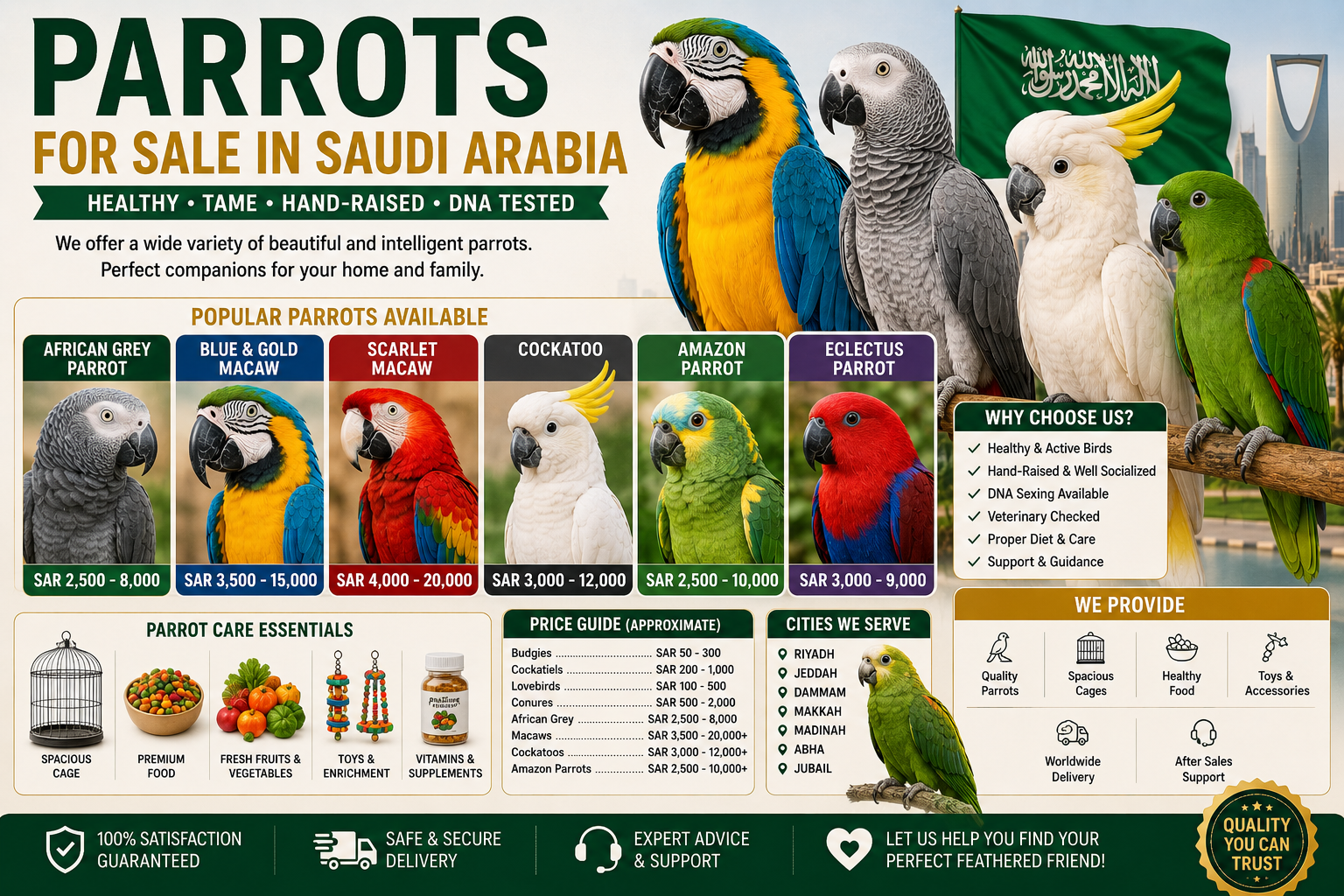
Parrots in Saudi Arabia: Popular Species, Prices, Care & Legal Requirements (2026)
Parrots are among the most intelligent and colorful companion birds in the world, and interest in keeping them as pets has grown in Saudi Arabia. From the highly intelligent African Grey to the vibrant Indian Ringneck and the elegant Alexandrine parrot, there are many species that attract bird enthusiasts because of their appearance, ability to mimic sounds, and long lifespan.
If you’re researching parrot ownership in Saudi Arabia, you may have questions about common species, typical price ranges, legal requirements, health certificates, and daily care. This guide answers those questions in one place and explains what prospective owners should know before bringing a parrot into their home.
Why Parrots Are Popular in Saudi Arabia
Parrots are valued for their intelligence, social behavior, and ability to form strong bonds with their owners. Some species can learn words and sounds, while others are admired for their striking feathers and playful personalities.
Common reasons people choose parrots include:
- High intelligence and trainability
- Long lifespan compared with many other pet birds
- Ability to mimic speech and household sounds (species dependent)
- Wide variety of colors and sizes
- Interactive personalities that enjoy enrichment and socialization
Popular Parrot Species in Saudi Arabia
Several parrot species are commonly discussed by bird enthusiasts in Saudi Arabia.
African Grey Parrot
The African Grey is well known for its exceptional intelligence and remarkable ability to mimic human speech. With proper care and enrichment, these parrots can live for several decades.
Alexandrine Parrot
The Alexandrine parrot is recognized by its larger size and elegant green plumage. It is generally calm, curious, and capable of learning words and simple phrases with regular interaction.
Indian Ringneck (Indian Parrot)
Indian Ringnecks are energetic, intelligent birds that can become excellent companions when properly socialized. They are popular because of their bright colors and potential talking ability.
Cockatiels
Cockatiels are smaller parrots that are often recommended for first-time bird owners due to their gentle temperament and relatively straightforward care requirements.
Budgerigars (Budgies)
Budgies are among the most common pet birds worldwide. They are active, social, and can learn simple words despite their small size.
Typical Price Ranges in Saudi Arabia
Parrot prices vary widely depending on several factors, including:
- Species
- Age
- Whether the bird is hand-raised
- Health status
- Breeder reputation
- Training and socialization
- Color mutations
Rare species and birds with extensive training often command higher prices than more common companion species.
Factors That Influence Parrot Prices
Several characteristics affect a parrot’s value:
- Species rarity
- Age and maturity
- Veterinary health records
- DNA sex testing (where applicable)
- Hand-feeding history
- Ability to mimic speech
- Overall temperament
- Availability in the local market
Health Certificates for Parrots
Depending on the circumstances, health documentation may be required when importing or transporting parrots. Requirements can vary based on origin, destination, and current animal health regulations.
Generally, responsible owners should ensure that a parrot has:
- A recent veterinary health examination
- Documentation of any required testing
- Identification records where applicable
- Import or transport paperwork when required by authorities
Before transporting a bird internationally, always verify the latest requirements with the relevant Saudi government authorities and your airline.
Choosing a Healthy Parrot
When evaluating a parrot, look for signs of good overall health.
Healthy parrots typically have:
- Bright, alert eyes
- Clean nostrils
- Smooth, well-maintained feathers
- Active behavior
- Normal breathing
- Clean feet and beak
- Healthy appetite
A pre-purchase examination by an avian veterinarian is a good practice whenever possible.
Caring for a Parrot
Responsible parrot ownership requires daily attention and long-term commitment.
Essential aspects of care include:
- A spacious, appropriately sized cage
- Daily out-of-cage exercise where safe
- Fresh water at all times
- A balanced diet formulated for the species
- Toys and enrichment to prevent boredom
- Regular veterinary checkups
- Positive social interaction
Which Parrots Live the Longest?
Lifespan depends on species and quality of care.
Some parrots are known for exceptional longevity, including:
| Species | Approximate Lifespan |
|---|---|
| African Grey | 40-60 years |
| Alexandrine | 25-35 years |
| Indian Ringneck | 20-30 years |
| Cockatiel | 15-25 years |
| Budgerigar | 7-15 years |
Good nutrition, enrichment, and veterinary care can significantly influence a bird’s quality of life and longevity.
Frequently Asked Questions
Can parrots learn to talk?
Some species, particularly African Greys and Indian Ringnecks, are known for their ability to mimic words and sounds. Individual birds vary greatly.
Are parrots suitable for first-time owners?
Some smaller species, such as budgies and cockatiels, are often considered more manageable for beginners, while larger parrots generally require more experience and commitment.
Do parrots require regular veterinary care?
Yes. Routine examinations by an avian veterinarian help monitor health and detect problems early.
Conclusion
Parrots are intelligent, social companions that require long-term commitment, proper nutrition, mental stimulation, and regular veterinary care. Whether you’re interested in learning about African Greys, Alexandrine parrots, Indian Ringnecks, or other popular species in Saudi Arabia, understanding their needs and applicable regulations is essential for responsible ownership.
By researching species characteristics, expected costs, health requirements, and daily care, prospective owners can make informed decisions and provide parrots with an enriching and healthy environment.